Homeowner symptom guide
Water Coming Up From Your Basement Floor Drain? Here's What It Means
Water coming up through a basement floor drain almost always means a blockage somewhere downstream in the main drain line, not a problem with the floor drain itself. Because the floor drain sits at the lowest point in the plumbing system, it's usually the first place water and sewage show up when the line can't drain freely from a bathroom, laundry, or any other fixture in the house. The most common cause is a clogged or partially blocked main line, often from grease, debris, or root intrusion at a pipe joint. Heavy rain can add to the problem in homes where groundwater seeps into a cracked line or where an older municipal system gets overwhelmed. If this is happening, stop running water anywhere in the house and don't flush toilets until the line is checked — adding more water only pushes more backup into the basement. In many Middlesex County homes with finished lower levels, this is treated as urgent for exactly that reason.
Do this first
Immediate steps before help arrives.
- Stop running water anywhere in the house — showers, laundry, dishwasher, all of it.
- Don't flush toilets until the line has been checked.
- Avoid direct contact with the water; treat it as contaminated even if it looks clear.
- Keep kids and pets away from the affected area.
Diagnosis
What usually causes it.
- Main line blockage. A clog somewhere in the main drain line — grease, debris, or a partial collapse — keeps water from anywhere in the house from draining out, so it backs up and finds the lowest opening, usually the basement floor drain.
- Root intrusion at a pipe joint. Tree roots entering through a cracked or separated joint can slow the line gradually or block it outright, especially in older Middlesex County neighborhoods with mature trees near the sewer lateral.
- Blocked P-trap in the floor drain. Less often, the floor drain's own trap is blocked with debris or sediment. This usually affects only that one drain rather than causing backup when other fixtures run.
- Groundwater or storm infiltration. Heavy rain or saturated soil can push groundwater into a cracked or poorly sealed line, adding volume the pipe can't handle even without a hard blockage.
- Municipal sewer surcharge. In some older combined systems, heavy rain overwhelms the municipal main itself, and water backs up into private laterals with nowhere else to go.
Self-check
What you can check yourself.
- Note whether the water appeared only at this floor drain or if other fixtures (toilets, tubs) are backing up too — that pattern matters.
- Check whether the backup started right after heavy laundry or dishwasher use, which can point to a partial main-line blockage.
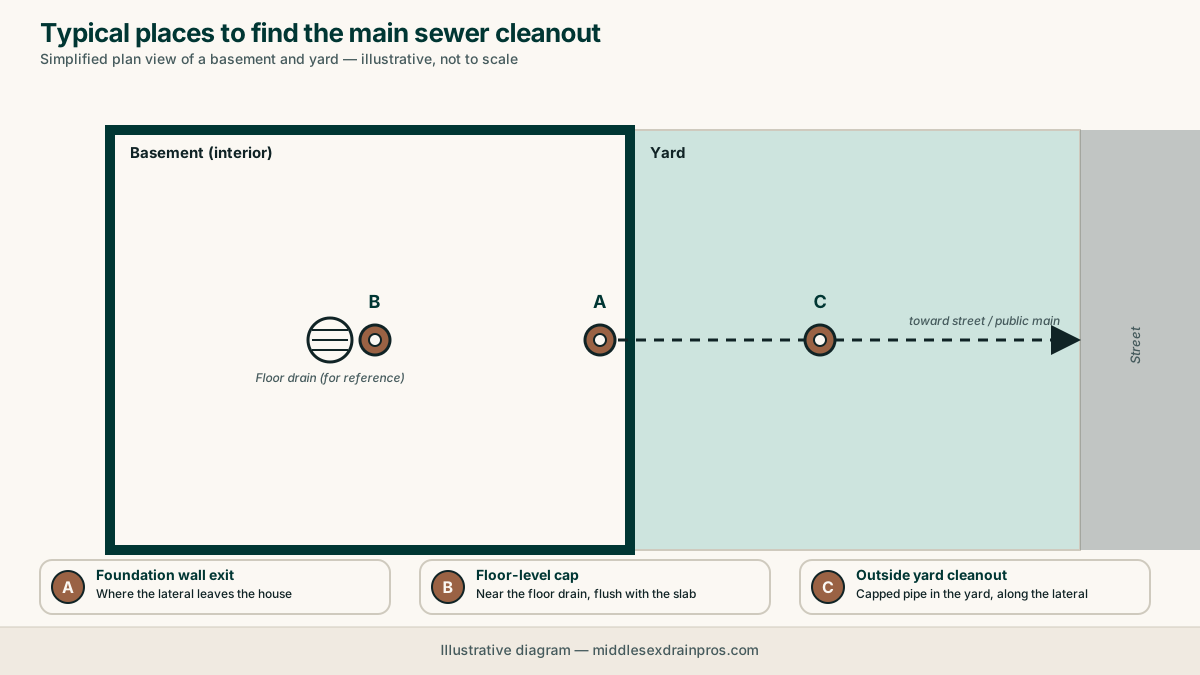
- Locate your main cleanout so you can describe its location when you call for help.
Call a pro
When to bring in a camera.
- More than one fixture is affected, not just the floor drain.
- The water looks or smells like sewage rather than clean groundwater.
- The backup keeps happening after it's been cleared before.
Next step
Route this to the right service.
This is the core visible-backup pattern that service is built around — stopping water use, clearing the line, and deciding on cleanup are handled as connected but separate steps.
Related services
Nearby Middlesex towns
Clear next step
Call to route a Middlesex County sewer or drain problem.
Ask about emergency drain cleaning, basement drain backups, camera inspection, roots, and trenchless options.
We are building vetted local coverage. Requests are routed only where a relevant sewer and drain provider is available.
The intake line takes calls and voicemail around the clock. If you reach voicemail, say your town and what's backing up — messages are transcribed and reviewed for routing. Prefer not to call? Use the intake form at /contact/.
FAQ
Common homeowner questions
What does black water coming up the floor drain mean?
Dark or foul-smelling water usually means sewage rather than clean groundwater, which points to a main line blockage rather than simple storm infiltration. Avoid contact with it and stop using water in the house until the line is cleared.
Why is my floor drain overflowing the basement?
An overflowing floor drain is the visible end of a blockage further down the line. Water from other fixtures has nowhere to go, so it rises out of the lowest drain in the house, which is usually the basement floor drain.
What do I do about cleanup after a sewage backup?
Clearing the line and cleaning up affected areas are two separate jobs. Sewage-contaminated water and materials should be treated as contaminated; a plumber can open the line, but flooring, drywall, or belongings may need separate remediation depending on what got wet.
How much does it cost to clear a blocked main line?
Clearing a main line blockage through an accessible cleanout typically runs about $250 to $800, more toward the high end for after-hours calls or difficult access. Pricing varies by market and how the blockage is reached.
Should I keep flushing to see if it clears on its own?
No. If water is already coming up a floor drain, adding more water usually makes the backup worse and increases what needs to be cleaned up. Stop using fixtures until the line has been checked.