Homeowner symptom guide
Why Is My Toilet Backing Up Into the Bathtub?
If flushing the toilet sends water up into the bathtub, the clog is almost never in the toilet itself — it's downstream, in the drain line the two fixtures share. The bathtub sits lower in the plumbing system than the toilet, so when something blocks the shared line, the water that can't get past the clog finds the next-lowest opening, usually the tub or shower drain. The most common cause is a blockage in the main drain line serving both fixtures, often from years of buildup or a root intrusion at a pipe joint. Less commonly, a blocked vent pipe or, on older properties, a septic system issue can cause similar symptoms. Because this points toward a shared line rather than a single fixture, plunging the toilet usually doesn't help and can even make the backup worse. In Middlesex County homes with older branch or main lines, this pattern is one of the clearest signs the blockage needs attention beyond a quick fixture-level fix.
Do this first
Immediate steps before help arrives.
- Stop flushing the toilet and stop running water in the bathroom.
- Don't plunge the toilet — with a shared-line blockage, plunging can push the backup toward the tub instead of clearing it.
- Avoid contact with the water in the tub if it looks or smells like sewage.
- Check whether other fixtures in the house are affected before calling for help.
Diagnosis
What usually causes it.
- Main or shared drain line blockage. The toilet and bathtub often share the same branch or main line before it leaves the house. A blockage anywhere in that shared section forces water back up through whichever fixture sits lowest — usually the tub.
- Root intrusion at a pipe joint. Roots entering through a cracked or open joint downstream can narrow or block the line gradually, so the backup may start small and get worse over weeks or months.
- Blocked or restricted plumbing vent. Vents let air into the drain system so water flows smoothly. A blocked vent can create pressure that pushes water and air back through the nearest trap, sometimes mimicking a clog that isn't really there.
- Old or undersized branch line. In older homes, a branch line that was undersized to begin with, or has narrowed with decades of buildup, can back up under normal use even without a hard blockage.
- Septic system issues. On properties with a septic system, a full or failing tank or a blocked line to the tank can cause the same backward-flow pattern seen with a municipal sewer blockage.
Self-check
What you can check yourself.
- Run the toilet by itself and watch the tub — if water rises in the tub every time, that confirms a shared-line blockage rather than a toilet problem.
- Check whether the same thing happens with the washing machine or another fixture, which points more strongly to the main line.
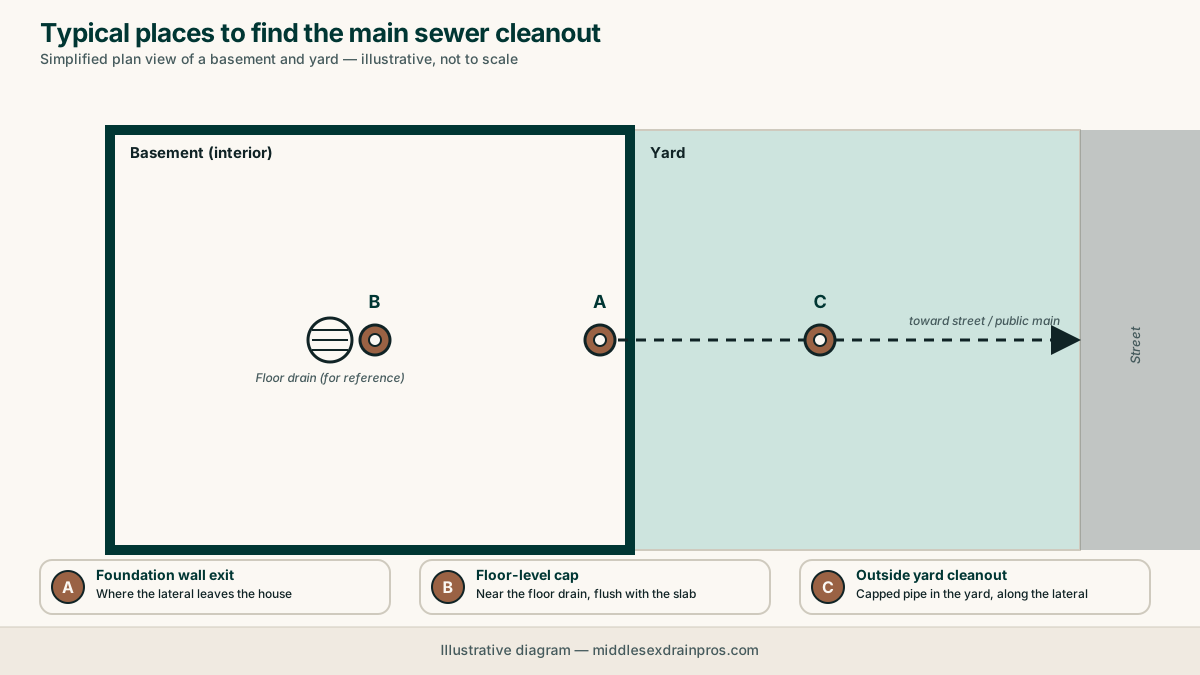
- Locate your main cleanout so you can point a plumber to it.
Call a pro
When to bring in a camera.
- Water backs up into the tub every time the toilet is flushed.
- More than one fixture is affected.
- The backup returns after a previous cleaning.
Next step
Route this to the right service.
Every likely cause here traces back to a blockage in the shared or main line rather than the toilet itself, which is exactly what main drain clog service is built to diagnose and clear.
Related services
Nearby Middlesex towns
Clear next step
Call to route a Middlesex County sewer or drain problem.
Ask about emergency drain cleaning, basement drain backups, camera inspection, roots, and trenchless options.
We are building vetted local coverage. Requests are routed only where a relevant sewer and drain provider is available.
The intake line takes calls and voicemail around the clock. If you reach voicemail, say your town and what's backing up — messages are transcribed and reviewed for routing. Prefer not to call? Use the intake form at /contact/.
FAQ
Common homeowner questions
Why does my toilet back up into the shower?
This happens for the same reason it backs up into a bathtub — the shower drain sits lower in the shared line than the toilet, so a blockage downstream shows up there first. It's a sign of a shared-line or main-line clog, not a toilet problem.
Why does the bathtub gurgle when the toilet flushes?
Gurgling without a full backup often means a partial blockage or a venting issue rather than a complete clog. Air trying to equalize through the shared line can bubble up through the tub drain's water seal when the toilet flushes.
Does flushing the toilet cause the tub to fill up?
If the tub fills every time you flush, that's a strong sign the two fixtures share a line that's partially or fully blocked downstream. It's not something plunging the toilet will fix, since the clog usually isn't in the toilet itself.
How much does it cost to clear a main line clog?
Clearing a main line blockage through an accessible cleanout typically runs about $250 to $800, depending on access and how the clog is reached. Pricing varies by market, and a recurring clog usually costs more overall than one diagnosis.
Can I use a chemical drain cleaner to fix this?
Chemical drain cleaners aren't a good match for a shared-line or main-line blockage. They're built for single-fixture clogs, can be unsafe to use before a plumber opens the line, and don't address the root cause if the blockage is roots or a pipe defect.