Homeowner symptom guide
Why Are All the Drains in My House Slow?
When every drain in the house is slow at the same time, the most likely cause is a partial blockage in the main drain line rather than several fixtures clogging on their own. The main line carries wastewater from every fixture in the house out to the sewer lateral, so a buildup of grease, debris, or scale anywhere along that shared path slows drainage everywhere at once. Root intrusion at a pipe joint is another common cause, especially in Middlesex County homes with mature trees near the sewer line. Less often, a blocked or undersized vent pipe can slow drainage system-wide by disrupting the airflow that lets water move freely. A single slow sink or shower is usually a local clog, often fine to handle with a plunger; when the whole house is affected together, chemical drain cleaner won't reach or fix a main-line problem and can make diagnosis harder. That pattern is the clearest signal to look at the main line itself.
Diagnosis
What usually causes it.
- Grease or debris buildup in the main line. Years of grease, soap scum, and debris can coat the inside of the main line and narrow it gradually, slowing every fixture that drains into it.
- Root intrusion at a pipe joint. Roots entering through a cracked or open joint can build into a mass that restricts flow for the whole house, not just one fixture.
- Venting problems. A blocked or undersized vent pipe disrupts the airflow that lets wastewater move smoothly, which can slow drainage throughout the house even without a hard blockage.
- Pipe damage or a bellied section. A sagging or damaged section of pipe can hold standing water and debris, gradually narrowing the effective flow path for the entire line.
- Scale buildup in older cast iron pipe. In homes with original cast iron drain lines, mineral scale can build up on the interior walls over decades, narrowing the pipe from the inside even without any single blockage.
Self-check
What you can check yourself.
- Note whether it's really every drain, or mainly the lowest fixtures — that distinction still points toward the main line either way but helps describe the pattern.
- Try running one fixture at a time and watch how it drains, rather than several at once.
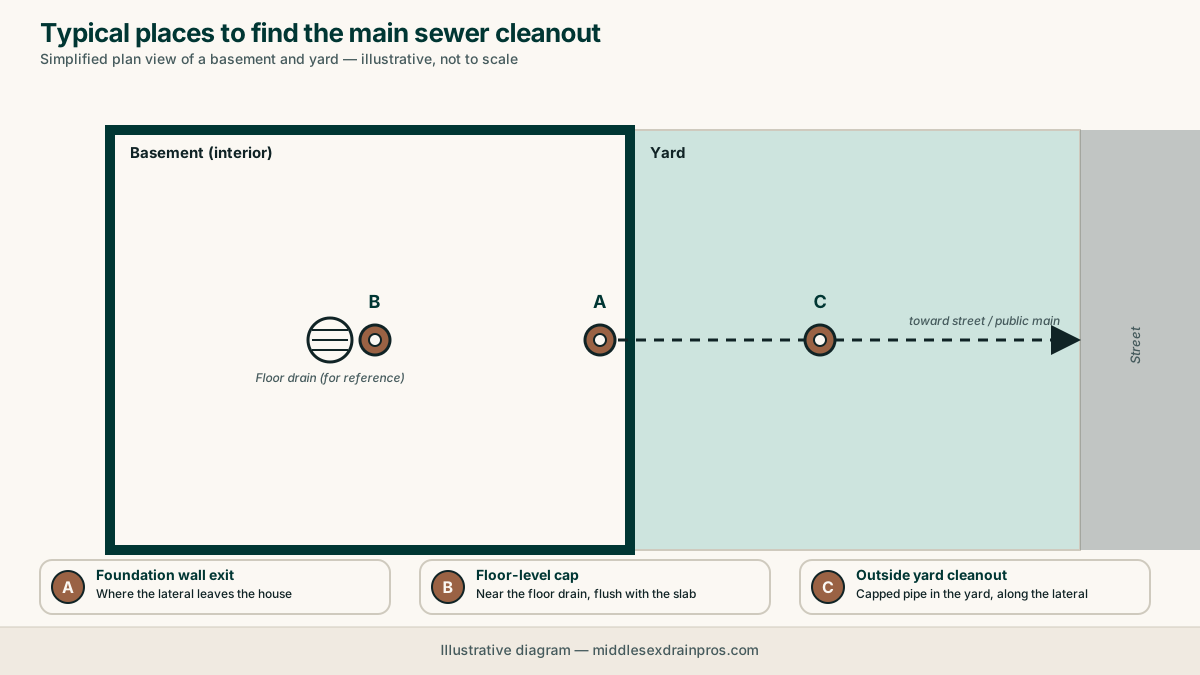
- Check your main cleanout, if you know where it is, for standing water or debris near the cap.
Call a pro
When to bring in a camera.
- More than one fixture is affected, especially if it's gotten worse over weeks.
- You hear gurgling from toilets or drains when another fixture runs.
- A cleaning has helped before but the slowness came back.
Do not ignore
Warning signs that mean act now.
- Toilets gurgle when another fixture, like the washing machine, drains.
- Sewer odor shows up near a basement drain or utility area.
- Water backs up briefly at one drain when a different fixture is used.
- Slow drainage has been getting worse over several weeks rather than staying the same.
Next step
Route this to the right service.
Slow drainage across the whole house is the textbook symptom of a main line problem, which is exactly what main drain clog service is set up to diagnose and clear.
Related services
Nearby Middlesex towns
Clear next step
Call to route a Middlesex County sewer or drain problem.
Ask about emergency drain cleaning, basement drain backups, camera inspection, roots, and trenchless options.
We are building vetted local coverage. Requests are routed only where a relevant sewer and drain provider is available.
The intake line takes calls and voicemail around the clock. If you reach voicemail, say your town and what's backing up — messages are transcribed and reviewed for routing. Prefer not to call? Use the intake form at /contact/.
FAQ
Common homeowner questions
Why is every drain in my house slow at once?
This pattern almost always points to the main drain line rather than several unrelated fixture clogs happening at the same time. Because every fixture in the house drains through that shared line, a blockage anywhere along it slows drainage everywhere.
What does it mean when all drains are backing up at once?
It's a stronger version of the same main-line signal — instead of just draining slowly, water is having real trouble getting past a blockage. This deserves prompt attention, especially if any fixture is close to overflowing.
Will a chemical drain cleaner fix slow drains throughout the house?
Not usually. Chemical cleaners are designed for a local clog in one fixture's trap, not a blockage in the shared main line. They can also make it harder and less safe for a plumber to diagnose the actual cause once they arrive.
How much does it cost to clear a whole-house drain clog?
Clearing a main line blockage through an accessible cleanout typically runs about $250 to $800, with pricing varying by market and access. If roots are involved, hydro jetting runs about $300 to $650 as a separate or follow-up service.
Is a single slow drain the same problem as whole-house slow drains?
No. One slow sink or shower is usually a local clog in that fixture's own trap or branch line. When every drain slows down together, the cause is almost always further downstream in the main line.