Homeowner symptom guide
Basement Floor Drain Backing Up When It Rains? Here's What's Happening
A basement floor drain that backs up specifically during or after heavy rain, but not the rest of the time, usually points to a storm-related cause rather than an everyday clog. In some older Middlesex County systems, particularly where storm and sanitary sewers are combined, heavy rain can overwhelm the municipal main itself, and water has nowhere to go but back up through the lowest drain in connected homes. Saturated soil can also push groundwater into a cracked or poorly sealed lateral, adding volume the pipe wasn't built to handle. Less often, the cause is closer to home — a failed or undersized sump pump, or a floor drain that was never properly graded or installed. Because the trigger is external pressure rather than a blockage inside your own line, a backwater or check valve is often the most effective fix once the cause is confirmed. If this happens with every significant storm, the pattern is worth documenting rather than treating each occurrence as a one-time event.
Do this first
Immediate steps before help arrives.
- Stop running water in the house during and right after the storm.
- Don't flush toilets or run laundry until the backup subsides.
- Avoid contact with the water — treat it as contaminated, especially if it has an odor.
- Move stored items off the basement floor if you can do so safely.
Diagnosis
What usually causes it.
- Overwhelmed municipal sewer main. In some older combined systems, heavy rain sends far more volume into the municipal main than it's designed to carry, and the backup travels into private laterals connected to it — including yours.
- Saturated soil and groundwater infiltration. Heavy rain saturates the ground around an aging or cracked lateral, and groundwater seeps in through joints and cracks, adding volume even without a blockage.
- Failed or undersized sump pump. If the basement relies on a sump pump to manage groundwater, a pump that's failed, undersized, or not on backup power can let water rise during a storm even when the sewer line itself is fine.
- Poor drain installation or grading. A floor drain installed without a proper backwater valve, or graded incorrectly, has less protection against reverse flow during a surcharge event.
- A partial blockage that only shows up under storm volume. A line that's fine under normal household use can still back up once storm volume is added on top, revealing a partial clog that wasn't obvious before.
Self-check
What you can check yourself.
- Check whether the sump pump (if you have one) is running and discharging away from the house.
- Note whether the backup happens with every heavy rain or only occasionally, and how it compares to backups on dry days.
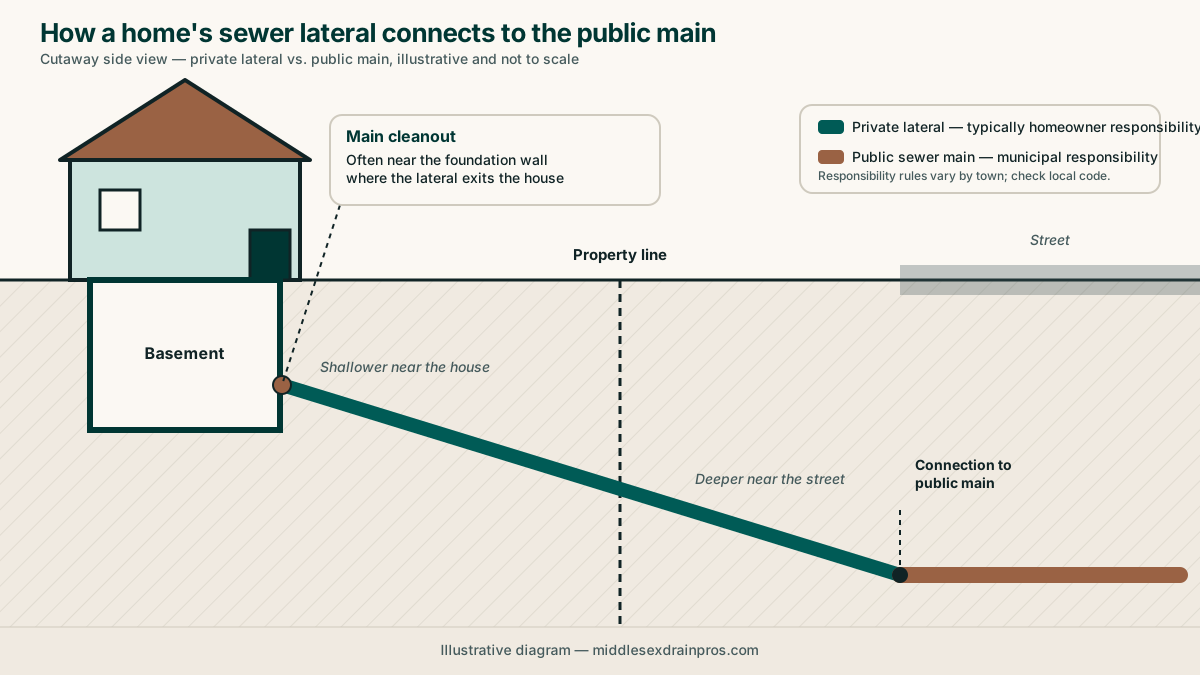
- Look for a backwater valve near the main cleanout, if you're not sure whether one is installed.
Call a pro
When to bring in a camera.
- The backup happens with most significant storms, not just once.
- There's sewage odor or visible contamination, not just clear water.
- You want to confirm whether a backwater valve is installed or working correctly.
Next step
Route this to the right service.
Storm-triggered backups are still a basement drain backup at the core, and the same triage — stop adding water, protect people from contact, and figure out the cause before repair — applies whether the trigger is a clog or a storm surcharge.
Related services
Nearby Middlesex towns
Clear next step
Call to route a Middlesex County sewer or drain problem.
Ask about emergency drain cleaning, basement drain backups, camera inspection, roots, and trenchless options.
We are building vetted local coverage. Requests are routed only where a relevant sewer and drain provider is available.
The intake line takes calls and voicemail around the clock. If you reach voicemail, say your town and what's backing up — messages are transcribed and reviewed for routing. Prefer not to call? Use the intake form at /contact/.
FAQ
Common homeowner questions
Why does my sewer back up into the basement during a storm?
In some older systems, storm and sanitary sewers share the same municipal main, and heavy rain can send more water into that main than it can carry. When that happens, the backup can travel into connected private laterals, including basement floor drains.
How do I stop stormwater from backing up into my basement drain?
A backwater or check valve installed on the lateral is the most common fix, since it lets water flow out but blocks it from flowing back in during a surcharge. Whether one is right for your home depends on your plumbing layout, which is worth confirming before installing one.
Why does my floor drain only back up when it rains?
If the backup only happens during or after heavy rain, that's a strong sign the trigger is external — either a municipal system surcharge or groundwater infiltration — rather than an everyday clog in your own line.
Is a sump pump the same fix as a backwater valve?
No. A sump pump manages groundwater collecting in a basement; a backwater valve prevents sewage from flowing backward into the house through the drain line. Some homes benefit from both, depending on what's actually causing the backup.
What does it cost to have this diagnosed?
A sewer camera inspection to confirm whether a backwater valve is installed, or where a lateral defect might be, typically runs about $150 to $500 depending on access. Pricing varies by market.